THE BLOG
The Blog Archive
Featured
AI Building
You Don't Have to Become a YouTuber: Make Videos for Your Business With Claude
In 2010, I paid $11,000 to edit a documentary, and the DVDs didn't even play. Here are the five kinds of video a business actually runs on, where Claude and Claude Code fit, and the prompts to make your first one this week.
Kim Doyal 5 min read

AI Building
How to Edit Video With Claude (Even If You've Hated Every Editor You've Tried)
I handed Claude a video I'd already published and asked for motion graphics, and it asked whether I wanted it to go get the logos. Here's what I learned about editing video with Claude this week, including a screen capture video I never had to record and the screenshot that started Scene Studio.
October 11, 2026READ MORE

AI Building
I Almost Built My Community on Skool. Here's Why I'm Building My Own.
A friend once told me I change tools more often than she changes underwear. She wasn't wrong. When I finally considered compromising on Skool, the research confirmed what my instincts had been telling me all along.
September 29, 2026READ MORE

AI Building
The Future of Digital Products Is More Useful Than Another PDF
I walked out of the Wealth Expo in 2006 with a box of binders and no one to ask when I got stuck. I have that same "things are changing" feeling about digital products right now, and this time the product can be the support.
September 20, 2026READ MORE
AI Agents
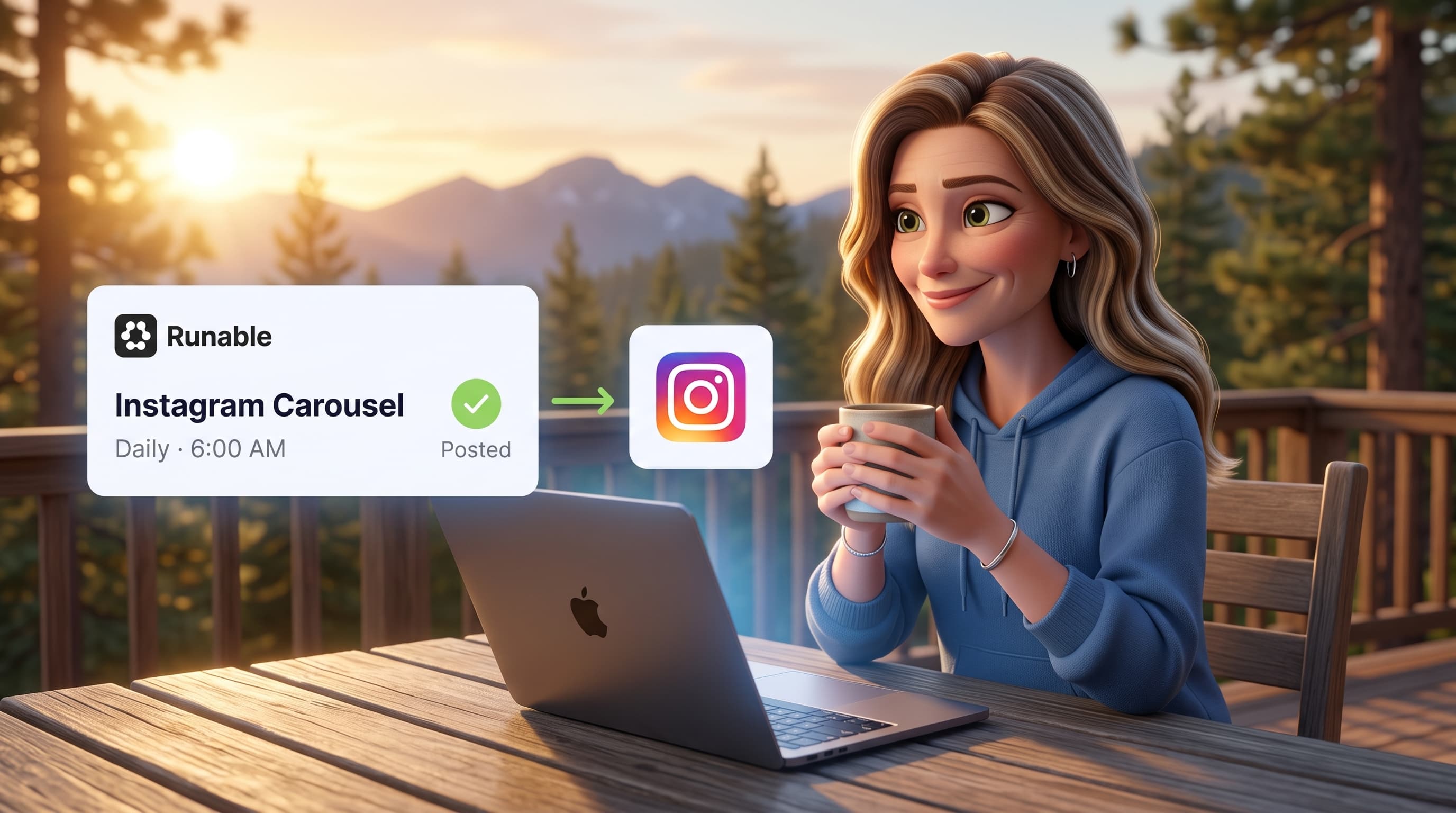
I Automated My Instagram Carousels and I Haven't Opened the App to Post Since
Instagram turns sixteen next month, and I've been working online longer than the app has been alive. Somewhere in there social media stopped being fun. I keep the account alive anyway, because Facebook bought Instagram in 2012 and that made it an ad surface: when I run paid traffic, people click through and look. So I built an Instagram carousel automation in Runable that reads my Substack archive, designs the slides, writes the caption, and posts it every morning at 6am. Eight minutes to build. Full prompt included, no opt-in.
September 19, 2026READ MORE

Not Everything You Build Needs a Launch... Most of it is How You Get Good
Someone reached out to be listed on a directory site I built and never promoted. That message did more for me than any launch I've run, and to explain why, I have to tell you what I finally noticed about the last 18 months of building: I was having more fun than I'd had in years, and I didn't want to own most of what I was making.
September 14, 2026READ MORE

AI Building
The Stripe Notifications That Proved She Could Build An App Without Coding
She was standing in her kitchen when her phone started going off. Stripe, Stripe, Stripe. Ellen Britt spent twenty years in emergency medicine, became a homeopath, and then decided to see if she could build software. Nine months and several apps later, here's exactly how she did it... the stack, the pricing, and the customer support system you can copy tomorrow.
September 10, 2026READ MORE
AI Building
Bring Your Own AI, Skip the Platform Sales Fee
I've had a ThriveCart lifetime license for seven years. Last month I went to add a coupon, found it behind a Pro upgrade, closed the tab, and built the checkout myself in twenty minutes. That twenty minutes is the story... the reason you've been renting software is that building it was out of reach, and that's no longer true. Here's the shape I keep seeing, why bring-your-own-AI kills the revenue share, and three prompts to find your own version.
September 7, 2026READ MORE

Business Growth
The Loudest Problem in Your Business Is Almost Never the Real One
My kids and I had an order of operations for the Christmas village we built every December, and you couldn't put the buildings first. Turns out that's the same problem I see in almost every business I look at: leaning on something you don't control, and naming the wrong one.
August 30, 2026READ MORE
AI Building
The Best Thing I Ever Built Still Wasn't the Right Message
Five builds, with different names, different logic, and different outcomes. The fourth version was the best-executed thing I'd made, and I rebuilt it anyway, because a lead magnet can be beautifully built and still not carry the right message.
August 24, 2026READ MORE
...