TABLE OF CONTENTS
The WordPress Years (Or: How I Learned This the Hard Way)The AI Space Right Now (And Why It's Both Inspiring and Exhausting)The Untapped Opportunity1. There's Plenty of Room2. Don't Assume Everyone Knows What You Know3. Infrastructure Changes Everything4. Go Deep, Not Broad5. Trust Yourself (Even When It Feels Scary)What This Means for Your ContentGet Crystal Clear on Who You Actually ServeSo Here's My Question for YouContent Strategy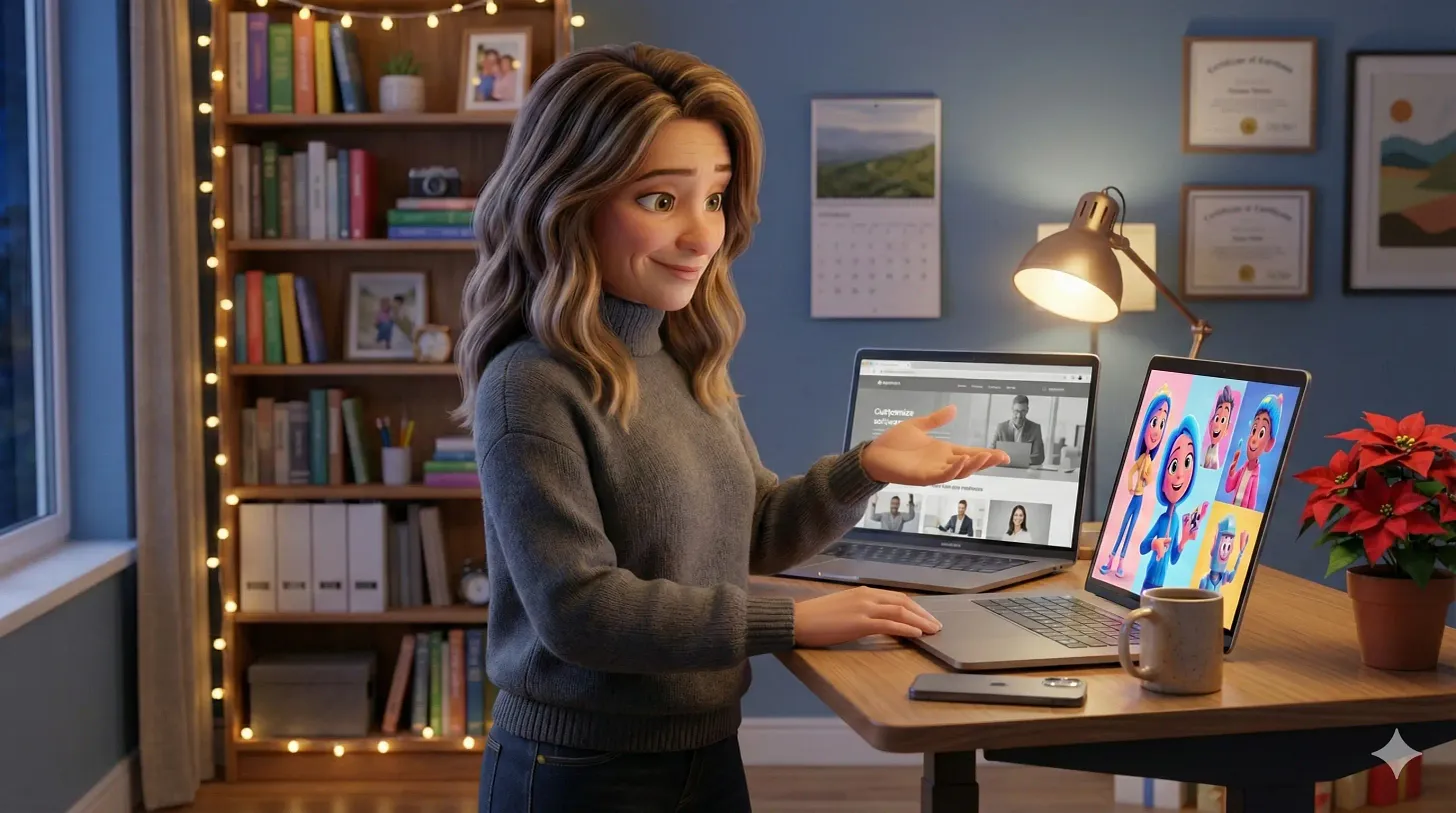

Your Content Doesn't Need to Impress Everyone (Just the Right People)
December 15, 2025|16 min read
For a split second, I almost changed something that was working.
I was looking at my Pixar-style 3D images, the bright, colorful, slightly whimsical graphics I use in all my content, and I had this fleeting thought: *Is this too childish?*
It lasted maybe two seconds before I countered it: I don't care. This makes me happy (cue Judy Garland and "I Don't Care" 🎶, lol…sorry for the earworm if you click through, but it's a great song).
And then I talked to a friend about it.
He said, "Kim, the second I see one of those images in your feed, I know it's your content."
That stopped me in my tracks. 🤯
The consistency with which I've doubled down on these images? It's accidentally become brilliant branding without me even trying. Not because it's "professional" or "industry-standard" or what everyone else is doing.
Because it's me.
And here's the thing: we've all probably had these types of thoughts when it comes to our business. We look around at what other people are doing, and at times we question our strategy, our direction, or methodology.
When I look at the AI space right now and see what other people are doing, from advanced tutorials and technical deep dives to "I built this in 3 minutes" demos, for a minute, I wonder if I should be doing that too.
But the problem is rarely that we're not doing enough (or what we're doing is "wrong").
The problem is that we're trying to serve everyone or someone else's audience instead of the people we want to serve.
The WordPress Years (Or: How I Learned This the Hard Way)
I've been here before.
Back in my WordPress days, I wasn't a coder or a developer, and I didn't build custom themes or write plugins from scratch.
My angle was simple: I helped everyday users figure out how to actually *use* WordPress. I fell in love with the platform and had fun sharing what I was learning.
And for a while, it worked beautifully. I built an audience, created content, and genuinely loved helping people.
But then something shifted.
I started attracting what I called "freebie seekers"… people who would email me constantly asking, "How do I do this? How do I do that?" with zero intention of ever paying for my time or expertise.
And honestly? I *did* have infrastructure: courses, coaching, and consultation calls. But I was running a service-based business that paid the bills, and I doubted myself. I was building all this free content without a clear path to make it the foundation of my business. It felt scattered, so I eventually stepped away from how-to content.
For years, I thought the problem was the content itself.
It wasn't.
The problem was that I lacked clear boundaries. And I was spending most of my time in spaces where my peers were, not where my customers were (my target audience wasn't my peers).
The content I was creating? That was for customers. But I was hanging out with other WordPress people, learning from them, sharing with them, getting validation from them. And that was valuable. But here's what happened: I started measuring my content by what my peers thought, not what my customers needed.
When you spend more time with your peers than with the people you're trying to serve, you start judging yourself by what everyone else in your space is doing. Not by what actually serves your audience.
It's not that you shouldn't connect with peers. Of course, you should (hello community!). But if most of your energy is going into peer spaces instead of customer spaces? If you're getting more validation from people who do what you do than from people who *need* what you do? That's when things get misaligned.
Looking back now, I realize I was creating the right content, but I wasn't consistently putting it in front of the right people. And the AI space is giving me another chance to do it differently… with better boundaries and a defined focus on serving the people who actually need my help.
The AI Space Right Now (And Why It's Both Inspiring and Exhausting)
Here's what I see when I look around the AI content landscape:
On Substack, I'm learning from brilliant people who are teaching advanced concepts. Deep technical breakdowns, strategic implementations, cutting-edge use cases. I'm putting into practice what they teach, and it's making me better (and it's SO fun!).
On YouTube, I see some creators who think a "tutorial" means reading the screen and showing you where to click. There's zero depth (and I don't buy that we don't have the attention spans for longer-form content 🙄), and zero "how would you actually use this in your business?"
Just surface-level tool tours that leave people more confused than inspired.
Now, they may not be trying to create tutorials. Perhaps they're only producing announcement videos. And that's fine… to each their own.
And, of course, many YouTube AI creators go into greater depth. You can spot those creators because they don't try to cover 20 updates in 15 minutes.
But here's the question: What type of viewers/subscribers are attracted to announcement videos or "INSANE!" updates?
If their business model is to create massive quantities of videos that either help monetize their YouTube channel and/or drive people to a community that is: free » paid » upsell other courses or services, so be it. (Those free communities are most often on Skool - which, in my opinion, is a heinous platform. No judgment for using it, but it leaves a lot to be desired).
I've joined two communities from YouTubers who use this model (both on Skool): one provides great long-form content on YouTube, and the other cranks videos out where every single one is an 'INSANE' update, and the difference in the quality of the content within the community matches the difference in the value of content on their channels. I've left the community that cranks things out.
I'm in this for the long haul. I want people who come in and say, "Wow, that was super helpful." Not just, "Cool, I saw the new feature."
I have a Google AI series that focuses on the fundamentals and capabilities of these tools. Not the most advanced use cases. Not the technical deep-dives. Just: Here's what this tool does, here's why it matters, and here's how I'm actually using it.
For a second, I wondered whether I should be doing what others are doing, given how much I value their content.
That thought didn't last long. 😉
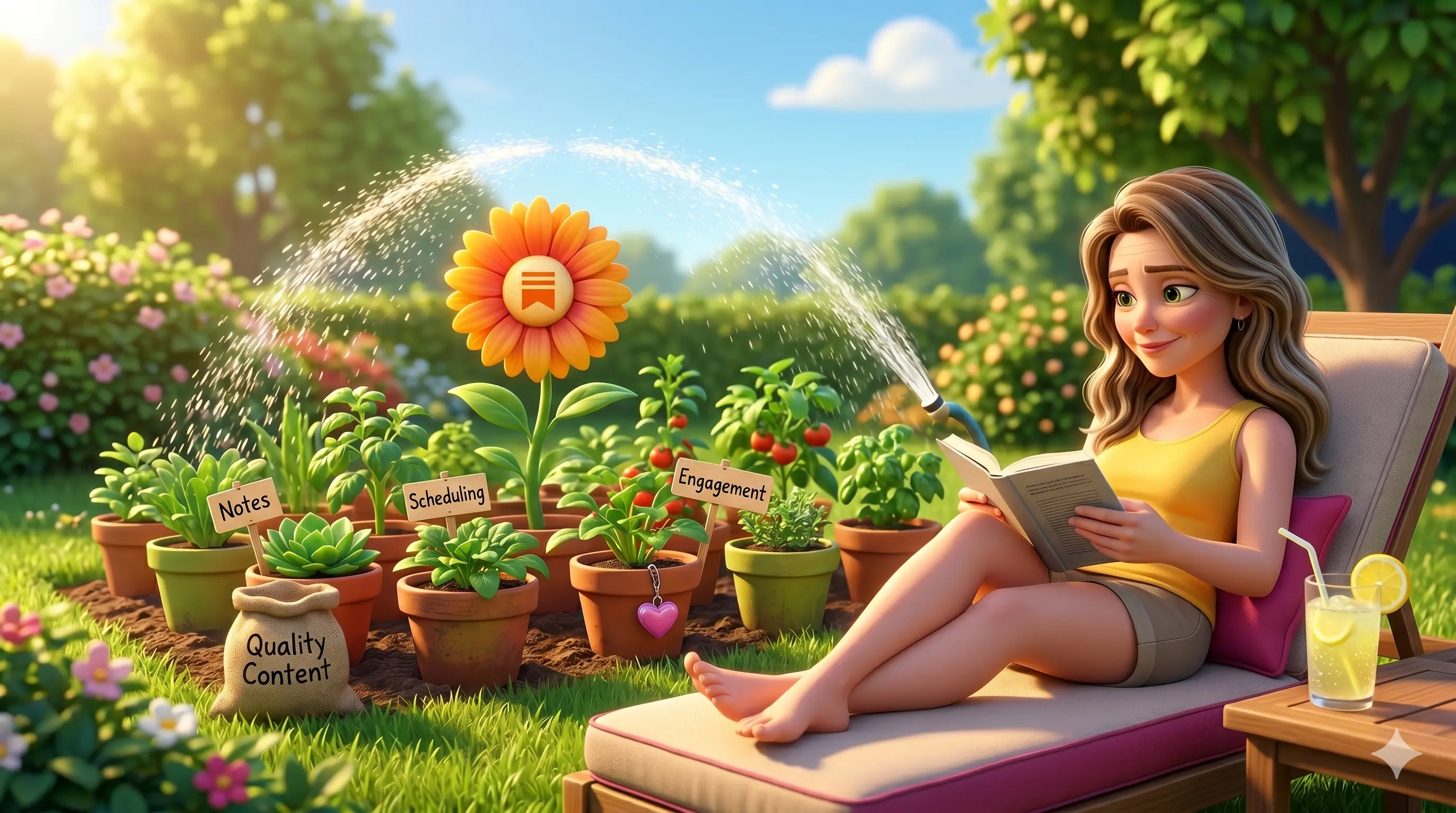
There's plenty of room for all of us because we're not serving the same people.
The women I follow on Substack? They're serving people who are ready for advanced concepts.
The YouTubers who click through feature updates without demonstrating anything? They're serving people who want quick overviews (even if I think they could do better… call me Judgy McJudgerson… again, cue Judy Garland).
And me? I serve people who want to understand the fundamentals and build on that. People who want to see how someone like them, not a developer, not a coder, just a solopreneur who loves this stuff, is actually using these tools to build a business (I also have clients and am building my own apps).
Different lanes, different audiences.
The Untapped Opportunity
Here's what I think is one of the biggest opportunities in the AI education space right now (and honestly, in any space):
Go deep with your people, not broad with everyone.
Here's what I mean. 👇🏻
1. There's Plenty of Room
In the AI space, you don't need to compete with the advanced technical creators. You don't need to cover every tool, every update, every announcement (especially since you'd be living at warp speed trying to keep up).
Some beginners need fundamentals. That's a lane.
Some intermediate users need practical implementation, also a lane.
Some advanced users need deep technical dives, yet another lane.
Everyone serves a different audience at a different stage. And the mistake most people make is thinking they need to serve them all.
You don't.
You just need to serve yours.
2. Don't Assume Everyone Knows What You Know
Knowledge bias is real.
(I know I've shared this definition before, but it bears repeating.)
The definition of knowledge bias can serve as a great reminder that not everyone knows what you know.
With knowledge bias, "There is a communication gap because the knowledgeable person often overlooks the need to provide necessary context or simplify concepts, assuming the information is obvious to everyone."
What feels "basic" to you is mind-blowing to someone else.
My Google AI series? I'm literally just sharing the fundamentals of NotebookLM, Gemini, ImageFX, and the other tools in Google's ecosystem.
As an avid daily AI user, I felt like I was 'stumbling' across features every time I used one of Google's tools. This felt like a small problem I could solve by sharing what I was discovering.
And people are responding.
A friend & subscriber in the UK has replied to every single post in the series—she's absolutely loving it, saying it's blowing her mind. People are telling me the "when NOT to use it" sections are especially helpful because most content only tells you what's possible, not what's practical.
I decided not to assume everyone knew what I knew or what I was discovering.
This is the trap: we think everyone is at the same level we are. So we skip the fundamentals and jump straight to the advanced stuff because we don't want to look like we're behind.
But your audience isn't behind. They're exactly where they need to be. And they need you to meet them there.
3. Infrastructure Changes Everything
Remember my WordPress freebie seeker problem?
That's not happening this time.
Because now the infrastructure looks different:
- A quiz that segments people based on their AI path
- Email sequences that provide value and build relationships
- Paid offers for people who want to go deeper (these are coming in Q1 of 2026, I have a simple plan and am excited to roll it out!)
- Resources that serve people at every stage
The "freebie seeker" problem was never really about the people. It was about the lack of a clear path for them to follow.
Now I do. And that changes everything.
I implemented better paths in other businesses, but the WordPress lesson stands out the most because it was my first foray into online business.
I can create free, valuable content and have a sustainable business because I've built the infrastructure to support both.
4. Go Deep, Not Broad
Here's the difference:
Broad content: "Look at these 10 AI tools! Here's what they can do!"
Deep content: "Here's how I used NotebookLM to turn a complex ad ecosystem into a visual infographic that finally made sense to me. Let me walk you through my exact process."
When I wrote that NotebookLM post, here's what happened: A friend of mine, Dallas Payne of Daring Next, had been avoiding Gemini entirely because of the way it responded to her (I love this). But after reading the post, she commented on one of my notes, saying it was "all my fault"—she had jumped into NotebookLM. She started using it for a complete rebrand, including an infographic.
That's what happens when you go deep. Not "here are all the features." But "here's the specific problem I had and how this tool solved it." That's what helps people see themselves in the process.
Your audience doesn't want a tool tour. They want transformation.
They want to see how you used the tool. What problems it solved, where you had your "a-ha" moment, and where things clicked for you. What you struggled with and what you'd do differently next time.
That's the content that changes people. Not the surface-level overviews all the time (there's a time and place for surface-level overviews, especially if it's something you've already gone deep on and are doing an update).
5. Trust Yourself (Even When It Feels Scary)
The Pixar images make me happy. So they're staying.
The Google AI fundamentals series feels right for my audience. So I'm keeping that lane (and more along those lines). The pace I'm moving at, deep instead of fast, aligns with who I am, so I'm not speeding up (the funny thing about slowing down is I somehow end up accomplishing more, in a way that feels easier and more joy-filled).
Choosing images and graphics that align with who you are, working at your pace, taking your own approach—that's what creates recognition.
Not because you're doing what everyone else is doing.
Because you're doing you, and the right people recognize it instantly (or eventually 😉).
What This Means for Your Content
If you're creating AI content (or any content, really), here's what I want you to remember:
Get Crystal Clear on Who You Actually Serve
Not "everyone interested in AI."
Specifically:
- Who are they?
- What stage are they at?
- What do they need that they're not getting elsewhere?
For me, it's solopreneurs, midlife entrepreneurs, and business owners who want fundamentals and practical implementation, not academic theory or intensely technical deep dives (neither of which are my wheelhouse).
People who want to know "how can I apply this in my business?"
And some fun, "OMG! I can't believe AI can do that!" content now and then. 😉
That clarity changes everything. Because once you know who you're serving, you stop worrying about everyone else.
You're not competing with advanced technical creators if you're teaching fundamentals. You're not competing with the "I built this in 3 minutes" crowd if you're going deep on process. You're serving people who need what you know, the way you explain it, at the pace you move. There's gold in meeting people exactly where they are… from exactly where you are.
You don't need to cover every tool, every update, every announcement. For your people, deep might beat fast every single time.
My Google AI series? I'm taking my time with each tool, really exploring it, sharing my real process. People are responding because it's thorough, not rushed. I could have published a single post titled "10 Google AI Tools You Need to Know" and been done with it.
Instead, I started with a 5-part series. Then it became six parts because I'm breaking the creative tools into two posts. I've also published a Gems post, an announcement post, and I'm working on an AI Studio post. By the time it's done, it'll probably be 10 posts (and I'm going to do videos on all of them)! It's its own little tutorial section that I can guide people to for years to come. That's the content that lasts (well, with updates of course, because one of the biggest challenges of technical content are the updates).
But going deep only works if you have the infrastructure to support it.
When people want more, you need a path for them—quiz, email sequences, paid offers, resources. You're not attracting freebie seekers by building this way. You're attracting people who want transformation, and you're ready to serve them sustainably. This is what I didn't have in my WordPress years, and it's what's making all the difference now.
Something else I've learned: if it brings you joy, it'll resonate with your people. The Pixar images? They make me happy. And apparently, they make me recognizable. Your version might be different… maybe it's your writing style, your video aesthetic, your approach to teaching, your sense of humor.
Whatever it is, don't change it because you think it's not "expert" enough. The right people will find you because of it, not despite it.
And finally, I know this is redundant and maybe a little obvious, but provide real value, not surface coverage. Show people how to apply what you're teaching and explain why it matters in their business. Share your real process, real struggles, and real wins.
Go deep on one thing instead of broad on ten things. That's how you create transformation, not by impressing everyone, but by genuinely serving the right people.
So Here's My Question for You
What's the Pixar image in your content?
The thing you almost changed because you worried it wasn't "expert" enough or "professional" enough or "advanced" enough?
Don't change it.
Double down on it.
Because the people who need what you have? They're not looking for the most advanced, most technical, most "impressive" content.
They're looking for you. The real you. The you who actually gets where they are and can help them move forward.
And that?
That's the most valuable thing you can offer.
P.S. If you're curious about how I'm using AI tools in my business, check out part one of my Google AI Series, Mastering the Brains and the Office. It's all fundamentals, all practical, and all based on what I'm actually doing because that's the only way I know how to teach.
Kim Doyal
Kim Doyal is a digital marketing strategist and AI builder with 18 years of online business experience. She is the founder of AI Spark Studios and SPARK Lab, and the creator of The Hub — a custom 33-agent AI operating system that runs her entire business. She has also built kimdoyal.com, StackRewards, and multiple AI tools and agents using vibe coding, a natural language approach to building software without a traditional development background.
Keep Reading
AI Building
How to Grow Your Substack Without Living on It... Built for Freedom — Part 01
I read the article on my phone in bed before I even got up, because I was genuinely excited about it. That kind of excitement means something right now. Here's what I started building, and why the how matters as much as the what.
April 26, 2026READ MORE
AI Building
What You Built Works... You Just Don't Want to Open It
I launched SPARK Lab minimum viable and then didn't want to log into it. It wasn't broken, it was flat, and flat is the harder problem because it doesn't tell you where to go. Here's the filter I ran on my own product, and the four prompts so you can run it on yours.
July 27, 2026READ MORE
Vibe Coding
How I Built a Custom AI App in 3 Hours (A Vibe Coding Case Study)
If you've been following my journey into "vibe coding," you know I'm always on the lookout for tools that make bringing ideas to life faster and more intuitive. While I've had success with other platforms, a new tool recently caught my eye and has completely changed the game for me.
August 28, 2025READ MORE